beginner’s guide

eIDAS 2.0 and EUDI Wallet: Everything You Need to Know

We’re here to help clarify the EU’s new digital identity program with thorough guides, use case examples, and how to prepare for 2027.

overview

Prepare for the Next Generation of Business Relationships

eIDAS 2.0 is here to help businesses build connections, onboard customers, and be compliant without the struggle of costly processes

The goal of the regulation is to simplify and secure digital interactions across the EU by creating a system where every business and customer has a single secure and verifiable identity. This way, we can build confidence that everyone is who they claim to be, which makes it possible for seamless and instant onboarding, enhanced security of legally binding documents, and offers users greater control over their digital credentials.
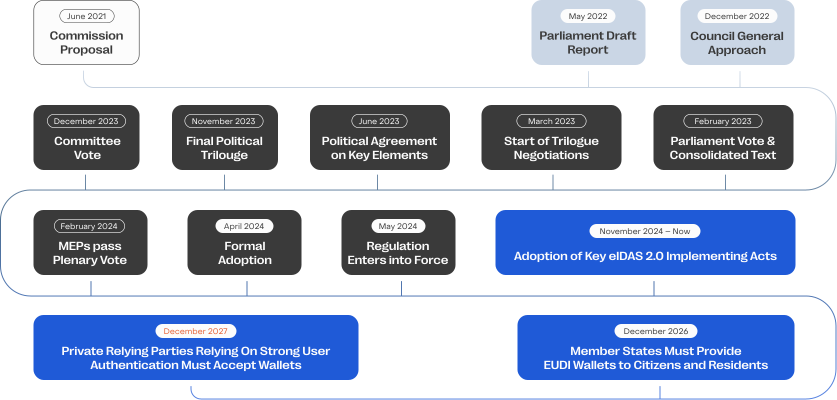
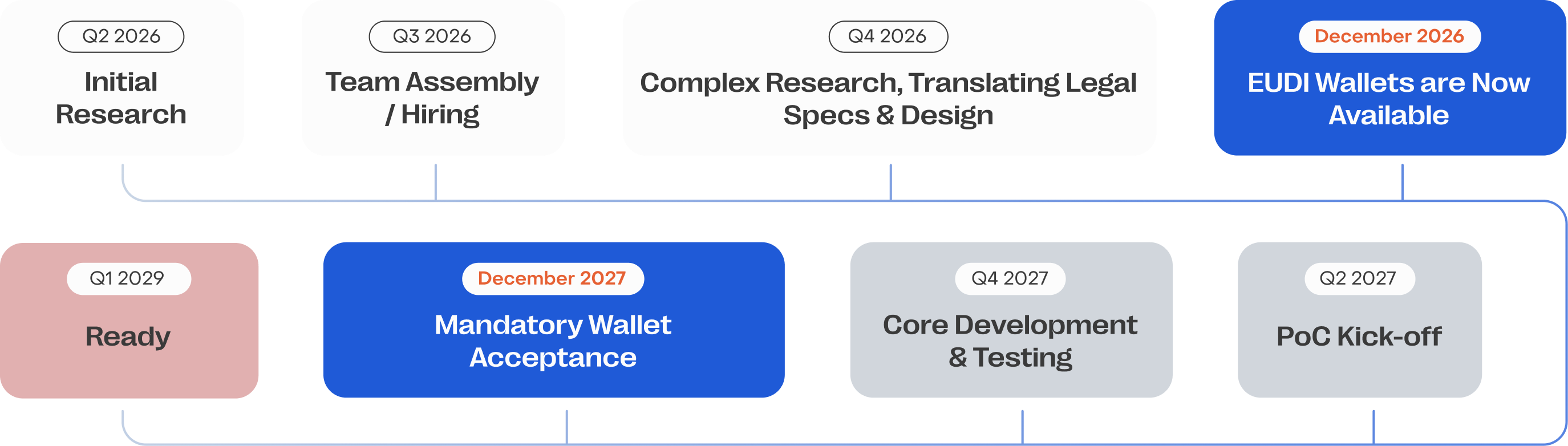
eIDAS 2.0 Rollout Timeline

The product of this initiative is the EUDI Wallet, a secure, government-backed mobile app that puts users in complete control of their own identity data and allows them to store and share verified information.

If your organization is required by EU or national law (or by a contract) to use Strong User Authentication (SCA/SUA) for online identification, which also means that you’re considered a Relying Party, you must also accept the EUDI Wallet as a recognized method for that authentication.

Relying Party – any organization that needs to request and rely on a user's data to provide a service

eIDAS 2.0 mandate applies to private sector services in areas like banking, financial services, transport, energy, health, telecoms, and others.

This means the choice is not if you will accept the wallet, but how you will implement it into your existing digital platforms. It will become a mandatory, recognized method for securing transactions and accessing accounts, sitting alongside the other SCA methods you already use.

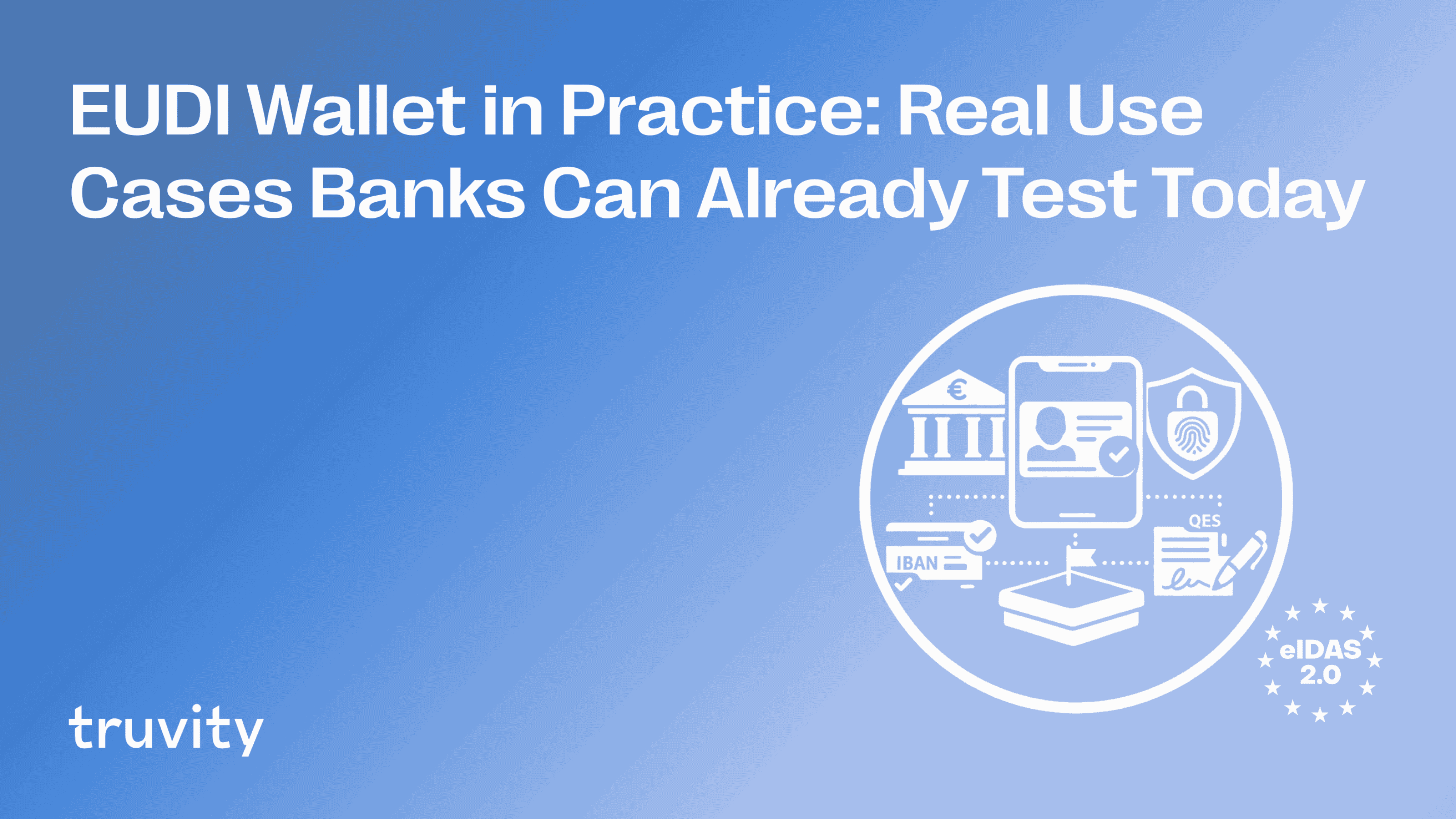
By integrating the wallet, you will be able to request and receive three key types of trusted, verified data from your users:

Person Identification Data (PID)

01

This is the essential, government-verified data about a person, such as their name and date of birth. Think of it as receiving the data from a digital passport

Electronic Attestations of Attributes (EAAs)

02

These are verified claims from other trusted sources. This allows you to instantly accept digital, verifiable proofs of a university degree, a professional license, or proof of account ownership

Qualified Electronic Signatures (QES)

03

You can allow your users to create digital signatures that have the same legal force as a handwritten signature, valid across the entire EU

On this page, you can find some useful resources we’ve built for you to go fully in-depth on all the details on implementation, use cases, and technology, or simple overviews of how businesses are getting ready to apply eIDAS 2.0 principles to their unique needs.

Sign up for email updates from Truvity

Keep updated on the latest developments in eIDAS 2.0 and identity technology

impact and use cases

The Impact of eIDAS 2.0 Across Industries

book eidas 2.0 strategy call

eIDAS 2.0 is set to significantly improve the onboarding and KYC/AML compliance of customers across Europe

How will this help me?

Banking and financial services can utilize the EUDI Wallet, containing state-issued identity data, for simple and instant identity verification when required, which also helps prevent identity fraud and can streamline the identity verification aspects of audit processes.

How will this help me?

Banking and financial services can utilize the EUDI Wallet, containing state-issued identity data, for simple and instant identity verification when required, which also helps prevent identity fraud and can streamline the identity verification aspects of audit processes.

eIDAS 2.0

eIDAS 2.0 will enable seamless payment processing and verification across EU borders

How will this help me?

Your banking and payment information will be linked to a single identity recognized across the EU, eliminating the need to create multiple accounts.

How will this help me?

You won’t have to create accounts and input your payment information for every new website, making payment quick and easy, and protecting against data breaches.

eIDAS 2.0

eIDAS 2.0 will enable healthcare providers across the EU to instantly share and access patient records

How will this help me?

Where you are within the EU, you will be able to retrieve your prescriptions, and if you need emergency medical care, your medical history will be instantly available to ensure the best possible care.

How will this help me?

Every hospital currently has its own system for patient record keeping, and this can make the sharing of critical information from one country to another very labour intensive and slow.

eIDAS 2.0

eIDAS 2.0 will streamline the user experience of DeFi platforms and instruments

How will this help me?

You’ll have one secure identity for creating, accessing, and managing your accounts, as well as storing your banking and debit information.

How will this help me?

You won’t have to manage a million accounts with different sign-on passwords and authenticators, everything will be shared through this single identity.

eIDAS 2.0
book eidas 2.0 strategy call
resources

Dive Deeper into eIDAS 2.0 & the EUDI Wallet

From high-level concepts to practical implementation, we've got you covered. Explore our in-depth guides and analyses to understand every angle and build your strategic roadmap to become eIDAS 2.0 compliant.

FAQ

Frequently Asked Questions

What is the Difference Between eIDAS 2.0 and the EUDI Wallet?

eIDAS 2.0 is the EU regulation that creates a single, harmonized legal framework for digital identity. It mandates that every member state must provide a digital wallet to its citizens.


The EUDI Wallet is the product resulting from the regulation. It is a secure, personal mobile app that allows users to store and share their official government ID (PID) and other verified credentials, giving them full control over their data.

Is the EUDI Wallet Mandatory, and for Whom?

The approach is the following:

  • For EU Citizens: Use of the EUDI Wallet is completely voluntary. The goal is to empower citizens with control over their digital identity, not to force them to use it.
  • For EU Member States: It is mandatory for every member state to issue a compliant EUDI Wallet to its citizens.
  • For Businesses: Acceptance of the EUDI Wallet will be mandatory for "very large online platforms" (as designated under the Digital Services Act) when a user wants to use it for login. For other private sector businesses, while not universally mandatory, they will be required to accept the EUDI Wallet for authentication in any case where a Member State requires strong user authentication.

What Role Does a Company Like Truvity Play in the eIDAS 2.0 Ecosystem?

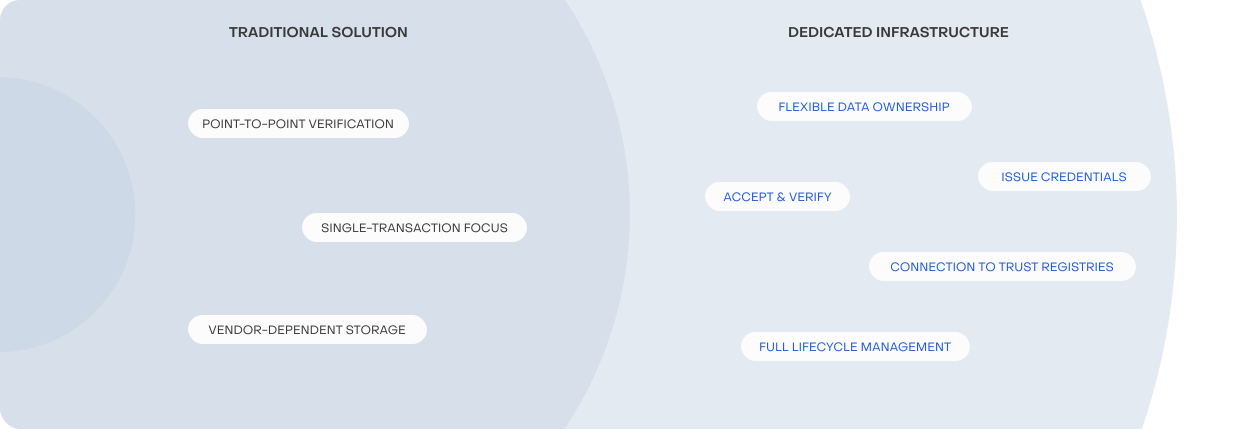
Truvity acts as a technical infrastructure provider within the ecosystem:

  • For Issuers: It provides an API to create standards-compliant verifiable credentials.
  • For Relying Parties (Verifiers): It offers a platform to request and verify those credentials.

Who are the Key Actors in the EUDI Wallet Ecosystem?

The EUDI Wallet ecosystem is built on a foundation of trust between several key actors, and each has its own role:
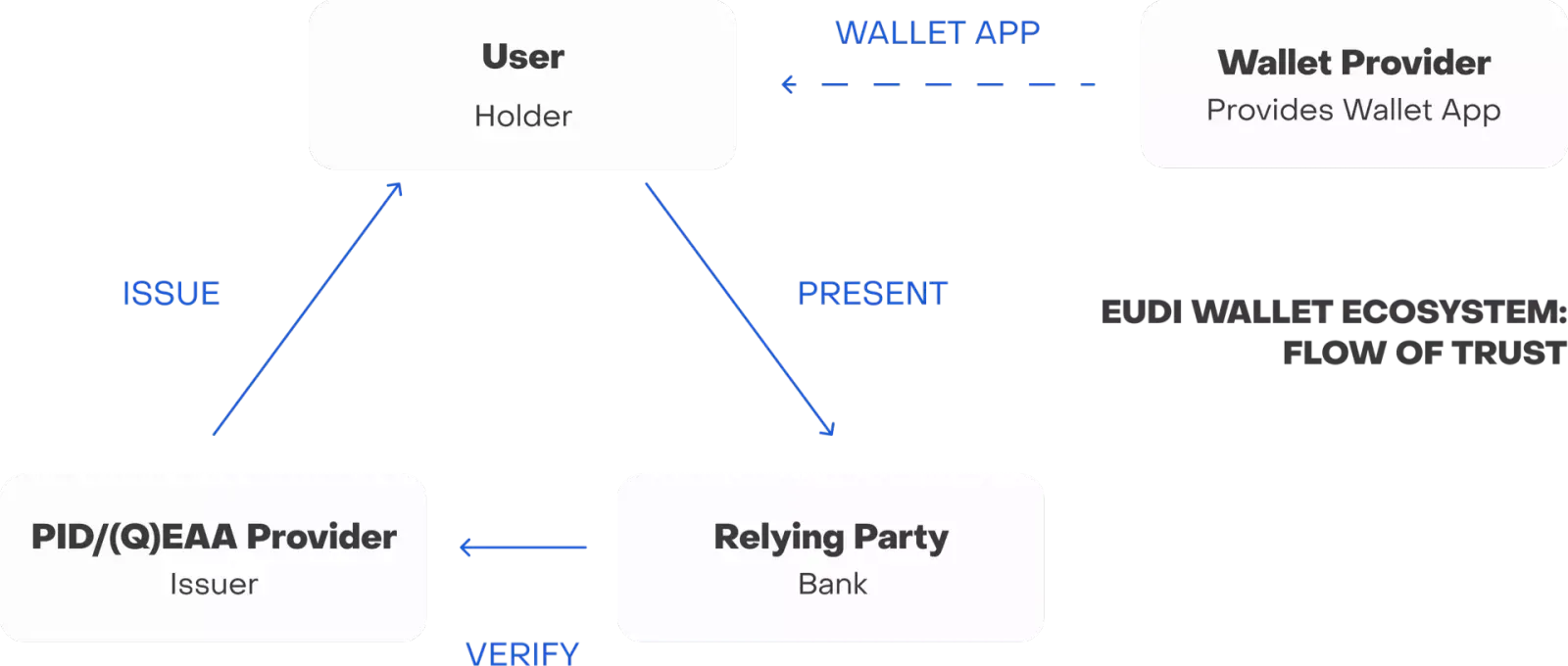
  • User (Wallet Holder): The citizen who controls the wallet and must consent to all data sharing.
  • Wallet Provider: The government-approved entity that issues and maintains the wallet app itself.
  • Relying Party: The organization requesting and relying on the user's data to provide a service, such as your bank.
  • PID/(Q)EAA Provider: The authoritative sources (e.g., a government civil registry, a university, or even another bank) that issue trusted data into the wallet.
eIDAS 2.0 FAQ

Get Started
with Truvity

Drop Us A Line

Feel free to request more information.

Contact us

Keep On Learning

View all insights here.

read our blog

Truvity Platform

Ready for the future? See for yourself.

get Started