eIDAS 2.0 is more than a new regulation – it's the blueprint for the next decade of trusted digital banking in Europe. While the future possibilities are endless, the starting point is a legal certainty: in 2027, all EU banks will be legally required to accept the new European Digital Identity (EUDI) Wallet for any process requiring Strong Customer Authentication (SCA). This is a non-negotiable compliance deadline.
This immediate challenge is all about how you will ‘Comply’. It means integrating the wallet into the core of your digital experiences, from a customer logging into their account to the identity verification step of a new KYC onboarding.
But compliance is just the beginning. Once this foundation is in place, you can leverage it to ‘Compete’ in the new digital identity ecosystem. This is where the true strategic value lies, allowing you to move beyond just accepting data to issuing your own trusted information or enabling entirely new, secure digital workflows.
This article breaks down the path to compliance into three clear steps, mentioning the legal obligations, the practical user journeys, and the architectural concepts.
Before you can plan a project, every stakeholder needs a shared understanding of the core requirements. This section provides that foundational briefing, covering the non-negotiable legal and technical facts that will shape your entire strategy.
The core legal driver for banks is straightforward. Regulations you already follow, such as the Payment Services Directive (PSD2), require Strong Customer Authentication to secure transactions and account access. The new eIDAS 2.0 regulation now adds the EUDI Wallet as a mandatory, recognized method for performing this authentication.
The legislation is direct and unambiguous.
‘Where private relying parties … are required by Union or national law to use strong user authentication for online identification or where strong user authentication for online identification is required by contractual obligation … also accept European Digital Identity Wallets that are provided in accordance with this Regulation.'
– eIDAS 2.0, Article 5f(2)
This means the choice is not if you will accept the wallet, but how you will implement it into your existing digital platforms.
So, what is the EUDI Wallet? In simple terms, it's a secure, government-backed mobile app that puts users in complete control of their identity data. It allows them to store and share verified information with explicit consent, replacing the need for physical documents or manual data entry.
The wallet holds three key types of data:
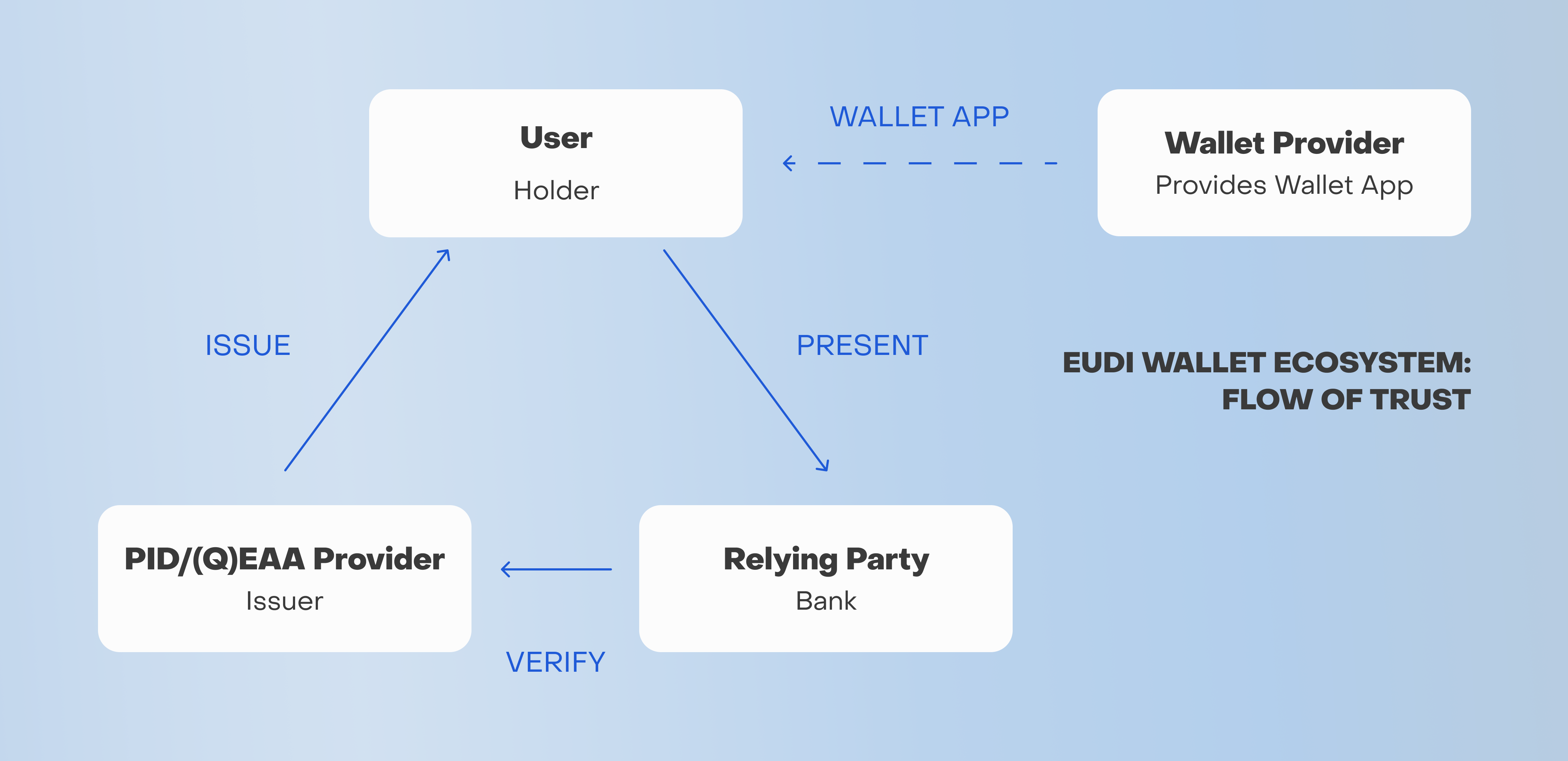
The EUDI Wallet ecosystem is built on a foundation of trust between several key actors. Understanding their distinct roles is crucial for any project planning.
Before you can build, you need a blueprint. This step involves analyzing your existing processes to determine exactly where the EUDI Wallet will integrate. This is a practical task for your product, compliance, and business analysis teams to collaborate on.
The first task is to identify every single customer journey that currently requires Strong Customer Authentication. Common examples include initial customer onboarding (KYC), logging in, authorizing high-value transfers, and changing personal details. Once you have this list, the next step is to specify the exact data attributes you need from the wallet to serve the customer in each journey. For a KYC check, this might be a full name and address; for a transfer, it might simply be an authentication confirmation. Finally, it's crucial to document these new, wallet-enabled workflows. These "to-be" process diagrams become the official source of truth for your product and IT teams.
Now, let’s make this very practical. Think about the friction in your current digital onboarding flow: the manual data entry, the requests for scanned IDs, time spent waiting for verification, and the customers who drop off out of frustration.
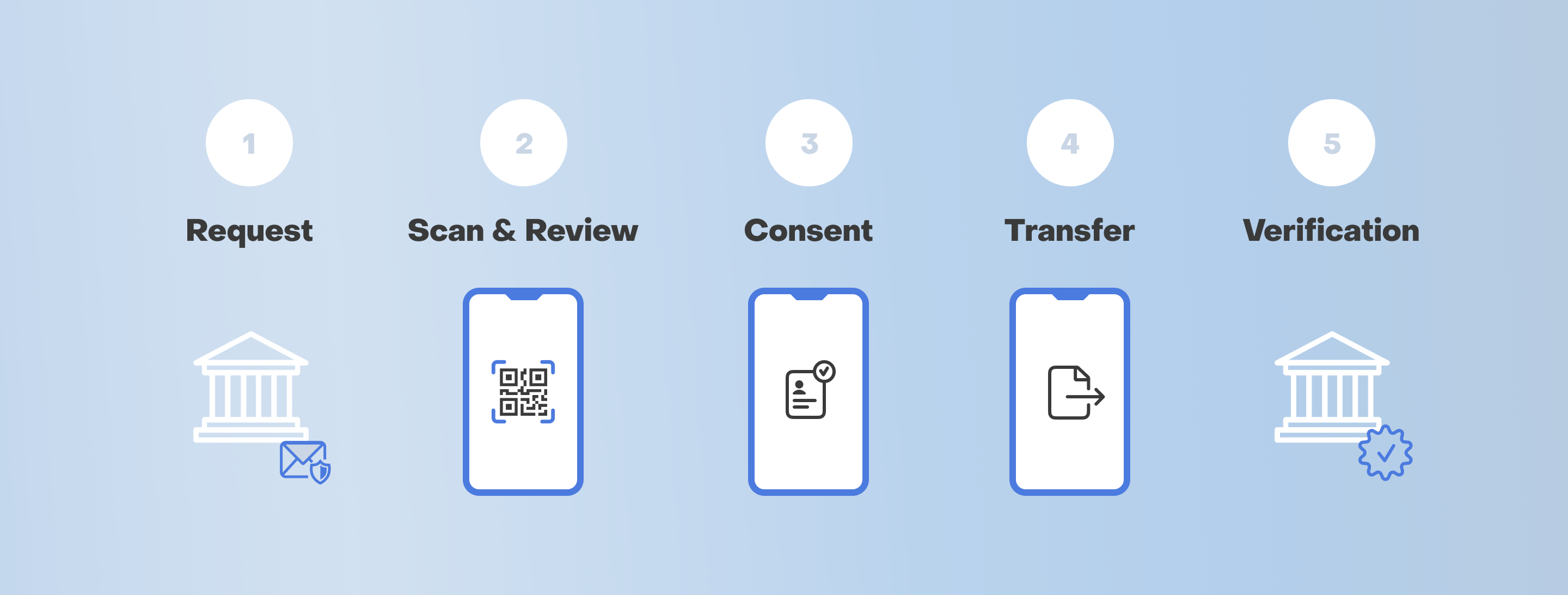
Here is what that same process looks like with the EUDI Wallet:
The entire process takes seconds. It dramatically reduces the risk of identity fraud and provides an excellent customer experience.
With your requirements understood and your integration points mapped, the final step is to build an actionable roadmap. This begins by confronting the core technical challenge: connecting a brand-new identity paradigm to the reality of your existing infrastructure.
To a decision-maker, this might sound like a standard software project. Why can’t the wallet just connect to your systems via an API like any other service? The answer lies in a fundamental shift in how identity data is managed.
[cta-wp-banks-playbook]
Given this complexity, attempting to rewrite your existing banking systems to handle wallets directly is extremely risky, expensive, and slow. The established best practice is to isolate the complexity.
This involves creating a dedicated "translation layer" or "adapter." This modern service acts as a secure bridge between the complex new wallet ecosystem and your stable legacy systems. It does the hard work: it communicates with the different types of wallets, handles all the advanced cryptography, and verifies the data according to the new open standards. Once the data is proven authentic, this layer then passes simple, verified information ("Yes, this person's identity is valid") to your internal systems in a format they can easily understand and use.
This approach identifies the key stakeholders for the project: it requires a leader who can coordinate the CISO (who owns security), the Head of Digital Onboarding (who owns the customer experience), and the IT Manager or CTO (who owns the legacy connection).
Building this translation layer is where a specialized platform can de-risk the entire project. Platforms like Truvity are designed specifically to act as this secure bridge, handling the complex cryptography and wallet protocols on your behalf. This allows you to meet the compliance deadline by connecting the new world to the old, without undertaking a costly and risky overhaul of your core infrastructure.
Once you have a plan to bridge the technical gap for compliance, you can focus on the strategic roadmap. This is where you leverage your new infrastructure to compete. The two main opportunities are becoming a trusted data issuer by providing attributes like 'proof of funds', and leveraging Qualified Electronic Signatures (QES) to fully digitize high-value workflows like mortgage applications. Both require a clear business case and a plan to navigate the certification processes, but they unlock significant new value.
Getting ready for eIDAS 2.0 doesn't have to be an overwhelming process. By breaking it down into a clear, achievable project, you can move forward with confidence. The three-step framework of Understand, Map, and Plan provides a repeatable methodology for any bank. By first tackling the mandatory "Comply" work tied to the 2027 deadline, you build the foundation to unlock the powerful "Compete" opportunities of tomorrow – becoming a trusted data issuer and a provider of seamless, digitally signed agreements.
With the 2026 budget cycle well underway, now is the critical time to start this planning. Ensuring your organization's roadmap and resources are aligned for this shift is essential for staying ahead of the regulatory curve and positioning your bank to win in the new era of digital trust.
To help you get started, we invite you to book a complimentary 30-minute eIDAS 2.0 strategy session with our experts. We can help you navigate the complexities and build a clear, actionable plan for your organization.
[cta-form-eidas2 session]
Identity, Trust and everything in between.

.svg)

.svg)